

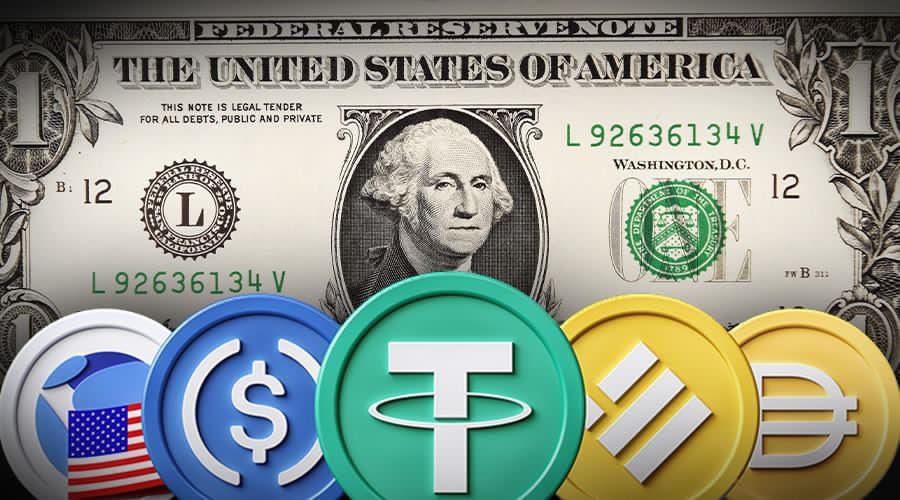
With the GENIUS Act now in force, stablecoin regulation in the United States has moved from policy debate to statutory implementation. The Act establishes a federal framework governing payment stablecoins, including rules on issuer eligibility, reserve composition, redemption rights, and supervisory oversight. Its structure reflects a long-standing regulatory preference for embedding money-like instruments within the existing financial system rather than allowing parallel monetary arrangements to develop outside it.
Industry associations have played an active role in shaping the policy environment that led to the GENIUS Act. Among these, the American Bankers Association has been a consistent participant in discussions on digital assets and stablecoins. Representing federally and state-chartered banks, the ABA has historically engaged lawmakers and regulators on issues affecting payments, deposits, and financial stability.
In the context of stablecoins, the association’s public position focused on the risks posed by privately issued digital instruments that function as substitutes for money without being subject to bank-level regulation.
In comment letters, public statements, and congressional testimony, the ABA repeatedly raised concerns relating to the operation of stablecoins outside the traditional banking perimeter. These included the absence of prudential safeguards comparable to those applied to bank deposits, the potential for liquidity stress during mass redemptions, weaknesses in consumer protection where reserve backing and redemption rights were unclear, and broader implications for the stability and integrity of the payments system. The association consistently advanced the view that entities issuing instruments used as money should be subject to comparable regulatory standards, irrespective of the technology used.
Reflected Outcomes in the GENIUS Act
Several features of the GENIUS Act correspond closely with positions long advocated by banking associations. The Act restricts the issuance of payment stablecoins to regulated entities subject to prudential supervision. It imposes requirements for high-quality, liquid reserves maintained on a one-to-one basis and establishes enforceable redemption obligations. Supervisory authority is vested primarily in banking regulators, and activities resembling maturity transformation or credit creation are constrained.
While these provisions cannot be attributed to any single actor, they align with a regulatory philosophy that prioritises continuity with existing banking and payments regulation.
The role of the ABA in the development of stablecoin regulation operated through established and transparent mechanisms. These included formal submissions during legislative consultations, testimony before congressional committees, direct engagement with lawmakers and regulatory agencies, and coordination with other financial-sector trade groups. Such participation reflects standard practice within the U.S. legislative and regulatory process.
The GENIUS Act reflects a policy choice to integrate stablecoins into the existing financial architecture. Rather than treating stablecoins as a distinct monetary innovation requiring a separate regulatory regime, the Act situates them within familiar supervisory structures. Innovation is permitted, but only within boundaries defined by prudential oversight, reserve discipline, and supervisory accountability.
Limits of the Influence Narrative
Although the enacted framework aligns with banking-sector advocacy, attributing the outcome solely to industry influence would oversimplify the legislative process. The GENIUS Act emerged from engagement among lawmakers, regulators, consumer protection groups, fintech firms, and digital asset issuers. Alignment between statutory outcomes and industry positions does not establish exclusivity of influence or eliminate the role of competing policy considerations.
Conclusion
The GENIUS Act illustrates how established financial-sector associations, including the American Bankers Association, have shaped the regulatory treatment of stablecoins in the United States. By framing stablecoins as money-like instruments requiring bank-equivalent safeguards, these associations contributed to a framework that integrates stablecoins into the existing financial system rather than allowing them to operate as an independent monetary category. The result is a regulatory model that emphasises stability, supervision, and continuity over structural experimentation.